

Unbeaten Paths 12
On Brandon Hobson's The Devil is a Southpaw
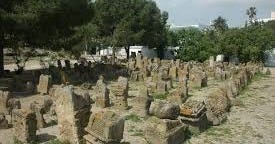
Surviving Tophet
Prior to his most recent novel, The Devil is a Southpaw (2025), Brandon Hobson’s fiction has been most notable for its portrayal of struggling young men, often Native American, and of the dynamics of Native American family life, as well as for its use of Native American folklore and cultural practices. None of these features are emphasized to the exclusion of other themes that might arise in any depiction of struggling and alienated American youth, as if dramatizing the particular problems of Native Americans was the overriding goal, although some reviews of Where the Dead Sit Talking and The Removed in particular did present them as “social problem” novels of a sort. It is perhaps inevitable that a writer of Hobson’s background (he is an enrolled citizen of the Cherokee nation) would have his work characterized as a vehicle of cultural identification—which it partially is, of course—but even Where the Dead Sit Talking and The Removed, the novels that brought the writer to critical prominence and established him as a Native American “voice,” show that Hobson does have an accompanying interest in the effects of point of view, and a willingness to depart from the underlying realism that he does also work to convey in these novels.
This more adventurous ambition is even more apparent in The Devil is a Southpaw. Again the emphasis is on youthful males, in this case two adolescent boys named Milton Muleborn and Matthew Echota. As in the two previous novels featuring teenage protagonists, Milton and Matthew are detached from family, although they are not orphaned but through much of the novel are present to us as inmates in a juvenile detention center. Their misdeeds are left pretty nebulous (mostly drugs and general disobedience), and none of the offenders to whom we are introduced seem especially prone to violence—indeed, the violence perpetrated or threatened inside the detention center comes from the “drill sergeants,” the guards who add to the inmates’ misery through their callous and contemptuous attitude. What makes both Milton and Matthew feel most estranged from the community values of their rural Oklahoma town is their attachment to art, to creativity in general, which the drill sergeants urge them to abandon in favor of more sensible, manly pursuits.
The most immediate manifestation of the protagonist’s artistic inclination is that the story of Milton and Matthew in the Tophet County Juvenile Correctional Facility is actually presented to us as “a novel by Milton Muleborn,” written after the putative events occurred (Part I). Parts II and III of The Devil is a Southpaw offer us the perspective of the “real” Matthew Echota and Milton Muleborn. But if Milton is the author of the interpolated novel entitled The Devil is a Southpaw, Milton Muleborn is also, of course, a fictional character in Brandon Hobson’s novel of the same name, and our view of the character is illuminated just as much through his imaginative projection of his earlier experiences as through the more straightforwardly confessional representation we find in Part III—Milton’s commentary on his novel and on the course of his life more generally. Ultimately, however, I don’t think that the portrayals of Milton Muleborn or Matthew Echota are in themselves meant to be the novel’s primary concern. Milton is rather the agent of its formal and stylistic devices, which are more numerous and more adventurous than in Hobson’s previous novels. Matthew Echota, for example, while he leaves an impression as a prodigy of sorts, really serves as an object of fascination for Milton, someone he both admires and resents for his seemingly effortless facility with art and, ultimately, success as an artist. This fascination, in turn, motivates much of what Milton does in The Devil is a Southpaw, both as character and creator.
Milton is driven to write The Devil is a Southpaw, in fact, as a way of ordering his own ambivalent feelings about the influence his memories of Matthew have had on subsequent, rather disordered, life:
Behold my innocence: my entire life has been a longing to be close to Matthew Echota, but it was a longing not uncommon among people who have lived indigent, lonely lives as adults, who have failed to maintain employment, regular health screenings and good finances. Matthew, being an idee fixee, is my worst characteristic, it’s true, it is absolutely the worst, not my mental health diagnosis or my intelligence or poverty, despite what anyone else says or believes.
Although Milton refers to his novel as a “memoir,” the portrait of Matthew Echota it presents is one conjured by Milton’s imagination. “I created a fictional version of Matthew Echota in my own specific way,” Milton tells us in Part III, which perhaps allows Milton to think of the work as a memoir—it is finally all about Milton and his attempt to counteract Matthew’s influence, not just by altering the facts about the real Matthew Echota, making him a more vulnerable and diminutive figure, as well as also depicting his death at the end of the story, but also by asserting his artistic authority in the act of transforming Matthew into his own artistic creation.
It could be said either that Milton succeeds in remaking Matthew Echota as well as his own unsettled youth into an artistic vision of sorts or that he overdoes it, mistaking exaggeration and indulgence for genuine aesthetic expression. The prose in his novel is often overcooked, deliberately extending itself in meandering compound-complex sentences and invoking an artificially enhanced vocabulary (as if writing with a thesaurus nearby). The narrator writes of Matthew’s effect on the inmates of the correctional facility:
We knew early on that he possessed what we wanted, even if his mother put his glasses on him first thing in the morning or read him Anacreontic verse while she trained him in adages written in modern English as they relaxed in the sultriness of low clouds on warm afternoons, or when she sat with him upstairs at the public library longer than any son had ever dreamed of on the face of the Earth, training him with the apodictic determination of a mother whose love for her son was inexhaustible, a fierce and immortal influence, an irresolvable love none of the rest of us had received or could even comprehend. . . .
The plot of Milton’s novel is similarly diverted from its apparent purpose: what is initially a combination prison memoir and realistic expose of youth incarceration is interrupted by scenes registering how the inmates’ isolation makes them susceptible to dreamlike visions and ghostly presences, the narrative sometimes erupting into outright surrealism, as when the facility is bombarded by a plague of frogs, an episode that perhaps most directly represents Milton’s resort to imaginative embellishment. The culmination of such embellishment is in his novel’s final sections, in which the inmates stage an escape that sends them into a phantasmagoric dreamscape populated by Matthew’s disappeared sister Nora, the doppelgangers of Salvador Dali and Frida Kahlo, and which appears to the boys “like the dream world we had read about in books, a place of haunted mansions with the ghosts of murdered lovers, sick horses, and headless knights, with the bones of the dead scattered around. . . .” The novel ends with Matthew and Milton about to be re-apprehended and taken back to the correctional facility. Their retreat into art isn’t finally going to cancel out reality, which will assert its prerogatives.
Parts II and III of The Devil is a Southpaw (Brandon Hobson’s novel) would seem to be the implicit recognition of this uncomfortable truth. Part II offers an ostensible interview with the older Matthew Echota (conducted by “Sanbo Hornbond”). The interview is brief, and doesn’t really provide a vivid account of the older Matthew beyond establishing that he holds a respectable position in the art world and has overcome whatever obstacles he encountered in his younger days—although both his experience in a “corrupt juvenile detention center” and his connection to Matthew are confirmed: Matthew offers an explanation for his incarceration (one not mentioned in Milton’s novel), and he arrives at the interview with the manuscript of The Devil is a Southpaw (presumably sent to him by Milton). The effect of this ostensible update of Matthew’s life is to give us a view of him outside of MIlton’s interested perspective, sandwiched between the literally fictional portrayal of the younger Matthew and Milton’s later reflections, supposedly more anchored in the actual truth (about himself, at least). But of course there is nothing to bely the possibility that this Matthew, and the purported interview, are also Milton’s creation, although Part II most immediately reminds us that both Matthew and Milton are the creation of the author of the novel appropriating the title of Milton’s novel—Brandon Hobson.
It is not misleading to call Hobson’s novel a metafiction, even though it shares with his previous realistic novels the concern for the struggles of youth (if anything made more dramatic here by introducing his characters as literal prisoners in a correctional facility) and the depiction of the lives of rural Oklahomans (with somewhat less emphasis specifically on the circumstances facing Native Americans). While the reference to Sanbo Hornbond—an anagram for Brandon Hobson, of course—as the interviewer in Part II is an amusing reminder that the characters in The Devil is a Southpaw are a product of the writer’s imagination, it does not exactly undermine the representational illusion on which the novel still depends. Nevertheless, the novel as a whole does show a greater interest in the formal possibilities of fiction as an object of the writer’s interest, and Hobson clearly intends to make the reader aware of the effects of form on our perception of the story he is telling.
The Removed used a fragmented, shifting point of view as its overall organizing principle, but in The Devil is a Southpaw, we are obliged to be aware of the way point of view always conditions our access to narrative “content,” and to that extent it is inherently unreliable. However, to say that a fictional account is unreliable is not to say that no meaning or truth can be found in it: its meaning requires that we consider not merely what is represented but also its source in possibly hidden motives, and its truth requires that we defer interpretation until we can sufficiently register the formal order of the work as a whole. This is actually true of all works of fiction, but a novel like The Devil is a Southpaw makes the necessity of these recursive moves especially explicit, so that in this sense it becomes a novel about reading a novel, albeit not to the point that it is no longer about the characters and experiences it portrays. Perhaps the most admirable achievement of The Devil is a Southpaw is in the balancing of its more adventurous strategies with its still compelling depiction of lost youth and their often bleak environment.
The novel is more adventurous as well in its use of style as a device that works directly to help characterize its protagonist, a device that prompts the reader to realize that Milton Muleborn is being a little more pretentious than is good for our judgement of him. While Milton’s language in Part III, in which he revisits his youthful experiences apart from their role in his novel, is somewhat more subdued, he remains a rather extravagant stylist, although less through reaching for the fancy and unfamiliar word and mostly through a penchant for rambling sentences. However, such a style may finally serve to remind us that Milton is a writer, by aspiration if not by trade, and The Devil is a Southpaw is a novel about the importance of art and creativity to outcast young people such as Milton and Matthew. Matthew’s fanciful excursions into reverie and sheer fantasy similarly might be judged as the overly ambitious flourishes of a budding young writer, although they also further allow Hobson to add more unconventional elements to the aesthetic framework of his novel, which is reinforced by the periodic placement of drawings, presumably by Milton, throughout the text.
These more varied devices, not previously so much in evidence in Hobson’s fiction, could be explicated as themselves the complement to the fundamental realism continuing to motivate Hobson’s work. The Devil is a Southpaw is not merely the testimony to the mistreatment of adolescent boys in a modern juvenile “correctional” institution (although it is that), but it is also the story of two young inmates’ attempts to cope with their circumstances by affirming the ability of imagination to transcend those circumstances. This doesn’t quite succeed entirely, at least for Milton Muleborn, but that is one of the realities that The Devil is a Southpaw portrays At the same time, the portrayal itself, through its reflection of the boy’s commitment to the idea in the novel’s own imaginative order, is ample compensation for the reader.